 Narvilnews Whole world at one eyesight

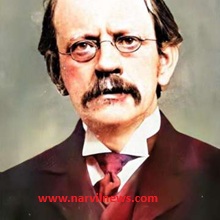
Niels Ryberg Finsen (1903) (16)
Nobel Prize in Physiology or Medicine 1903
Born: 15 December 1860, Thorshavn, Faroe Islands (Denmark).
Died: 24 September 1904, …
Finsen’s own pathological symptoms attracted his interest to the field in which he would make his great contribution to science: the biological question of the importance of light for huma n life and health and for the cure of disease. Already far bac k in time attempts ha d been made, despite the lack of scientific grounds, to attain better healing of skin eruptions in smallpox by protecting the patient from harmful light rays. Finsen found a n item by the Englishman C. Black (1867) to the effect that smallpox passe s mor e easily and leaves no scars if the patient can lie in a dark room.
The turn of the twentieth century welcomed Niels Finsen, an unlikely medical hero. Cursed with an incurable and debilitating disease that ended in an early death, Finsen nonetheless used his keen observations and sheer persistence to discover phototherapy, and in the process, became Denmark’s first Nobel laureate in Medicine.
Niels Ryberg Finsen was born on December 15, 1860 in the Faroe Islands, a Danish – ruled archipelago located about 400 miles off the coast of Norway. His life was a chronicle of setbacks and tragedies, beginning at the age of four when he lost his mother. In high school, he was initially dismissed as a boy “of good heart but low skills and energy”. At the University of Copenhagen, he began to experience marked fatigue and anaemia, which was later diagnosed as manifestations of Friedel Pick’s disease. The condition caused progressive thickening of the connective tissue in his heart, ending in constrictive pericarditis, cardiac cirrhosis and death at age 44.
Finsen noticed as a medical student that he would experience a resurgence of strength and stamina each time he was exposed to sunlight, and therefore, took to sunbathing as often as possible. This observation spurred a desire to explore its physiologic effects as well: “My disease has played a very great role for my whole development… The disease was responsible for my starting investigations on light: I suffered from anaemia and tiredness… I began to believe that I might be helped if I received more sun. I therefore spent as much time as possible in its rays. As an enthusiastic medical man, I was of course interested to know what benefit the sun really gave.
Apart from noting the sun’s effects on his own health, Finsen observed the way animals naturally responded to sunlight. For example, when gazing outside his window, he noticed that a cat perched on a roof would repeatedly move toward the sunny areas, away from the shade. He began to wonder if the sun’s rays had a beneficial effect apart from the warmth they provided. Physicists had already discovered that light and heat are of different wavelengths and occupy separate portions of the electromagnetic spectrum. The Swedish scientist Widmark had shown that sunburn is caused not by heat, but by “chemical rays,” or ultraviolet radiation that can cause chemical reactions. One of Finsen’s earliest experiments was to place an insect in a glass box of different colours. The insect would move toward red light, roughly corresponding to infrared or heat wavelengths, and away from blue light, which has a wavelength close to the ultraviolet (UV) spectrum.
Finsen came to recognise that excess UV radiation had a damaging effect on tissues. He chanced upon a wartime report by Picton, an American doctor, who noticed more rapid recovery in smallpox sufferers who were forced by combat -influenced circumstances to remain underground. They also had less scarring compared to patients who had free access to sunlight. Finsen suspected that UV radiation accelerated scar formation, while its absence underground allowed smallpox lesions to heal more efficiently. A smallpox outbreak in Norway gave him the opportunity to prospectively test this hypothesis, and he found that indeed, when he kept patients under a red light that filtered out the harmful UV rays, they recovered more quickly and did not scar.
Importantly, Finsen discovered that UV light was beneficial in treating lupus vulgaris, a devastating skin condition caused by Mycobacterium tuberculosis. Patients with the condition had a hideous visage, “a blank, reddish -white mass, ringed with two pink circles, from which dull eyes glanced staringly; there was no nose, and a ragged hole with everted granular border, served for mouth”. There was no effective therapy, so surgery was often offered, leaving ugly scars. At the Copenhagen Electric Light Station, where Finsen had been granted a small laboratory space, an employee with advanced intractable lupus vulgaris of the face was treated with one of the specialised lights he had been working on – in this case, one that concentrated UV rays rather than filtering them out. Complete cure came after several treatment sessions.
His marriage to Ingeborg Balslev, a bishop’s daughter, in 1892 only served to further his research work. This was exemplified by their joint effort to support Finsen’s wish to build a device that would select out the curative rays and thus, enhance their therapeutic utility: “He told the writer in his own simple way how he talked it over with his wife. They were poor. Finsen’s salary as a teacher at the university was something like $1.200 a year. He was a sick man, and wealth would buy leisure and luxury. Children, who needed care. were growing up about them. They talked it out together. and resolutely turned their backs upon it all. Hand in hand, they faced the world with their sacrifice. What of life remained to him was to be devoted to suffering mankind. This duty done, what might come they would meet together.”
Once built, news of the device spread quickly, followed by widespread application of this treatment at the Medical Light Institute in 1896, with Finsen as its director. The streets of Copenhagen “became filled with men and women whose faces were shrouded in heavy bandages” as patients flocked to the new treatment centre. His institute treated some 1,251 lupus vulgaris patients, about half of whom were cured. There was no remote hamlet in Denmark that did not witness a success story. With the Finsen light, he had given his people “the means whereby so hideous a human being can be restored to a fair semblance of his original self.”
Finsen’s health deteriorated further even as phototherapy cured many more patients. He developed intractable ascites despite a self-imposed diet of salt and fluid restriction, and required repeated paracentesis, reportedly on some eighteen occasions, with removal of up to six litres of fluid each time. By age thirty, he was wheelchair -bound. The seriousness of his health condition prompted the Nobel Prize committee to give early consideration to his achievements, and in 1903, at the age of 42, he became the first Danish Nobel laureate “in recognition of his contribution to the treatment of diseases, especially lupus vulgaris, with concentrated light radiation, whereby he has opened a new avenue for medical science.” Alas, his poor health prevented him from attending the traditional Stockholm festivities. Nine months later, on September 24, 1904, he was dead. His funeral, held in Denmark’s famous Marble Church, was on a scale befitting royalty.
Finsen’s awards and honours were numerous. He was named Knight of the Order of Dannebrog and later further recognised with the Silver Cross. He also won the Cameron Prize from the University of Edinburgh. One of the main streets in the Faroe Islands is named after him, and a monument to his work, entitled Mod lyset (Towards the Light), was installed in Copenhagen in 1909. There is also the Finsen Institute, which still exists today, although its focus has shifted from light radiation to research in cancer. Phototherapy played an important and dramatic role in Finsen’s time, but its impact has diminished with the eradication of smallpox and the discovery of antituberculous chemotherapy. But it remains useful for other dermatological conditions, and has found new uses, e.g. as a treatment for seasonal affective disorder.
Remarkably, Finsen’s own words, a hundred years back, had hinted at this application: “Let [the sunlight] break through suddenly on a cloudy day and see the change, we ourselves feel as if a burden were lifted… all that I have accomplished in my experiments with light, and all that I have learned about its therapeutic value has come because I needed the light so much myself I longed for it so.”
Amon g the Prize winners M. and Mme Curie and Finsen were unable to attend. Finsen donate d 50,000 crown s of the Prize money to the Light Institute, and 60,000 crowns to the Sanatorium for Heart and Liver Diseases. He died as he had lived, quietly, beautifully and with restraint, on a clear September 24, 1904, in Copenhagen.