 Narvilnews Whole world at one eyesight

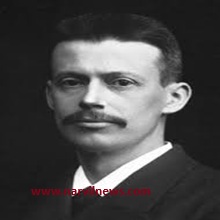
JOSEPH JOHN THOMSON 1906 (37)
-Nobel Prize in 1906 and his son’s Nobel Prize in 1937
-Born -18 December 1856 Lancashire, England,
_Died- 30 August 1940 (aged 83) England, UK
JOSEPH JOHN THOMSON was born on December 18, 1856, in a suburb (Cheetham) of Manchester. His father was a bookseller and publisher, specializing in old books, and the family was of Scottish origin. He came to be very well known to the Royal Institution, where he was non-resident professor of physics, and he often gave the Friday evening discourse.
To the student of physics of the present day he is known as the discoverer of the electron. Actually that word was coined before his work on the subject began and he preferred to use another ; but as hope to make clear, he did more than any other single person to prove the objective existence of the entity we call by that name, and to provide the theoretical ideas on the subject with experimental proof. But he was not a man of one discovery, and I wish to bring up in rapid review as many as I can of the departments of physics in which he was interested, and which sometimes were connected by unexpected sequences of ideas.
He started as a mathematician-he was second wrangler when Larmor was senior-and his earliest important work was as a disciple-he was never the pupil-of Clerk Maxwell. Maxwell’s theory of electricity was not well appreciated when it came out in 1873. It was indeed rather obscure, since the physical conceptions underlying Maxwell’s ideas did not appear clearly in the final mathematical form he adopted. ‘J. J.’, as he was always known, developed the consequences of the theory and showed in particular that a moving charged sphere had additional mass as a result of its charge—the first hint of Einstein’s E = mc2– and that the electromagnetic waves carried momentum as well as energy along their rays.
Then he became interested in vortex rings, of which smoke rings are a good example. Vortex rings appealed to nineteenth-century physicists, notably to Kelvin and to Helmholtz, as a possible explanation of atoms, because of their permanence. “It is indestructible and indivisible, the strength of the vortex ring and the volume of liquid comprising it remain for ever unaltered, and if any vortex ring be knotted or if two vortex rings be linked together in any way, they will retain for ever the same kind of be-knottedness or linking.” So when vortex rings were set as a subject for the Adams Prize, ‘J. J.’ took up their theory, and the prize-winning essay published in 1883 contained some interesting suggestions as to the way in which vortex atoms might link together to form molecules. Two, three, four, five or six can be linked together in a special way, but seven or more are unstable.
This early and forgotten theory led ‘J. J.’ to his earliest experiments on gaseous discharges, the subject he was to make peculiarly his own, and which was to occupy his attention into advanced old age. The connexion may not be obvious, but the theory indicated that the electric discharge in a gas would be associated with dissociation of the molecules in
a measurable fashion. The experiments were not in fact, very conclusive, but they led Thomson on to study other properties of the gaseous discharge, and especially the electrodeless discharge, for which he retained a life-long affection. More important than the results obtained was the experience with this kind of experiment, which was so useful to him later on.
The discovery by Rontgen of X-rays in 1895 is a turning point in physics. ‘J. J.’ was quick to take advantage of it and he and Rutherford showed about the same time as some other workers-that the X-rays made a gas conducting, thus providing a manageable method of ionization, a word they used in their paper. We shall see how valuable this was in the discovery of the electron.
The fundamental importance of the electron, as was fully realized at the time, is the proof that all matter contains at least this one common constituent, and that the atoms of nineteenth-century chemistry are not separate independent entities, as was then generally supposed.
The actual approach to the electron, the first of the common constituents, came from two different directions, neither of which seemed at the time to have much to do with the structure of the atoms of ordinary matter. Faraday’s laws of electrolysis early in the century had produced very strong evidence, which one now feels that the men of the time were very dense in ignoring, that electricity is somehow done up into units of which one, two or three, rarely more, may be attached to each individual atom.
Towards the end of the century people woke up to this, and Johnstone Stoney coined the word ‘electron’ for this hypothetical unit ; but as yet it had no other properties. Its magnitude could be estimated, though only very crudely. There was no evidence that it existed alone, apart from electrified matter. It might just have been a unit of exchange in Nature’s bank, like the ‘money of account’ in those countries where the unit of accountancy corresponds to no actual coin.
There were electron theories of a kind in the nineteenth century, but the first that led to anything of importance was that of Lorentz in the early 90’s, which immediately explained the discovery of Zeeman in 1896 that the spectrum of the light from a sodium flame was modified by a magnetic field.
Thomson’s early interest in atomic structure was reflected in his 1884 Adams Prize-winning paper on vortex motion. He published the application of kinetics in physics and chemistry in 1886 and 1892 and published a note on recent research on electric and magnetic fields. The second book deals with the results obtained after the publication of James Clark Maxwell’s famous “Thesis”, and is often referred to as “Maxwell Volume Three”. Thomson and Professor JH Poynting collaborated on the Four-Mass Physics textbook Properties of Matter and published Elements of the Mathematical Theory of Electricity and Magnetism in 1895. The fifth edition was published in 1921.
In this JJ Thomson biography we study about JJ Thomson’s early life, who is JJ Thomson, education, what experiment did JJ Thomson do, what did joseph john Thomson discover, etc.
Who is JJ Thomson?
Sir J.J. Thomson studied at Trinity College, Cambridge University, where he will continue to lead the Cavendish Laboratory. His research on cathode rays led to the discovery of electrons, and he sought further innovations in the exploration of atomic structure. Thomson scientist won the 1906 Nobel Prize in Physics among many honours.
It is interesting to recall, here in the Royal Institution, that Faraday’s last recorded experiment was an unsuccessful attempt to detect this, and that Zeeman, who had read Faraday’s work, was deliberately repeating it with more modern equipment. The other line of approach, in which ‘J. J.’ was tho leader, was given by cathode rays. These can be observed when an electric current goes through a very rarefied gas. They are more familiar to-day, in a slightly modified form, as the working medium of a television tube. They had been known from the middle of the century and their nature hotly disputed. The question became international ; on the whole the British and the French held the view that they were some sort of particle, whereas the Germans thought that they were waves and more akin to light. Of course, both were right, but the reconciliation was to come much later.
Cathode rays are deflected by a magnet as a stream of electrified particles would be, and Perrin showed that if shot into a box they gave it a negative electric charge. ‘J. J.’ combined these two experiments and showed that the magnetically deflected rays took their charge with them. More important, he showed that the deflexion was the same for all rays produced by a discharge of the same voltage whatever the gas and the material of the cathode. This experiment, which was published in February 1897, convinced him, I think, that they were not just ‘electricity’, whatever that mysterious entity might be, but part, and a fundamental part, of matter as well.
But more was needed, for there were serious difficulties. Hertz had found that they were not deflected by an electric field as charged particles ought to be, and Lenard at Heidelberg had found that they would go right through a thin metal window into the air outside. This seemed impossible if they were charged atoms~and no one had thought of any smaller particle.
The dramatic occasion was a discourse in the lecture room of the Royal Institution, given on April 30, 1897. After showing the modified Perrin experiment and photographs of the deflected cathode rays, he passed to the matter of the missing electric deflexion. The observation, though right in itself, was misleading. When the field was applied (as the experimenters thought) nearly all of it was neutralized by charges produced by the rays themselves in tho rarefied gas, so that the region where the rays actually went was devoid of field. The charges do not neutralize magnetic fields, hence the curious discrepancy. ‘J. J.’ managed to get the vacuum better and found a deflexion by electric fields. Later on he used this deflexion balanced against a magnetic field to find the ratio of the charge to the mass of the particles and their velocities in a way described in every text-book of electricity ; but actually on that evening he described another way of measuring the same quantity in some ways more direct. He measured in fact for certain rays their magnetic defiexion, and the heating effect that eorresponds to the transport of a unit of charge. In terms of symbols, the first gives e/mv and the second e/mv2, from which e/m and v can be found. Now e/m is a critical quantity.
The Faraday experiments had found it for ordinary atoms. It varies with the kind of matter, but even for the lightest atoms (hydrogen) the charge per unit mass, written e/m, was more than 1,000 times too small. Either each cathode ray had a charge 1,000 times the unit, or a cathode ray is more than 1,000 times lighter than the lightest chemical atom. But, all the cathode rays had the same e/m, no matter what the gas or what the metal used for the cathode from which they came. Since in Faraday’s experiments the charges seldom exceed 3 units, a constant value of more than 1,000 seemed most improbable, so the particles of cathode rays must have a subatomic mass which is the same whatever material they came from.
Determining the structure of the atom was the next logical question to address following the discovery of the electron by J. J. Thomson. It was already established the number of electrons within an atom was essentially half of the atom’s mass number (i.e., the ratio of the atom’s mass to that of hydrogen).
Hence the corpuscle was at least 1,000 times lighter than the lightest atom. It was established as a universal constituent of all matter; not the only one obviously, since ordinary matter is electrically neutral and ‘J. J.’s’ corpuscles were charged, but a true universal entity, more nearly recalling the philosophies of the Greeks than nineteenth-century chemistry_ In the very paper which described the now classic e/m experiment on cathode rays ‘J. J.’ turned to the next stage. Granted that electrons arc universal constituents of matter, how do they fit in ? Lenard’s experimental result that the distance a cathode ray could go through matter was inversely as the density over a wide range and independent of its chemical nature or physical state, seemed to ‘J. J.’ to give strong support, for the view that atoms contained electrons in number proportional to the mass of the atom. He considered, correctly, that the collisions of the rays in going through an atom would be rather with the individual constituent electrons than with the atom as a whole, so Lenard’s relation implied that the number of electrons per gram is the same for all substances. Ever on the look-out for a model, he adopted an experiment of the American physicist Mayer, which seemed to him to suggest very strongly something like the periodic table.
Now if this has any validity, even in an order-ofmagnitudc fashion, there will not be many thousands of electrons in an atom, probably only a few. Therefore, tho main mass of atoms cannot be due to electrons ; presumably it is supplied by the positively electrified component. Both these questions had to wait while knowledge accumulated on the behaviour of electricity in gases, on the action of X-rays, and on the behaviour of radioactivity, of which Rutherford made himself the master, using, in each case, the electron as a master key.
But what then of the positives, which must therefore somehow contribute the lion’s share of the mass of all atoms ? ‘J. J.’ supposed tkat the atom was like a gooseberry with corpuscles as the pips and the neutralizing positive charge spread out continuously rather like the edible part of the gooseberry. It was left for Rutherford to discover the nucleus.
‘J. J.’s’ reason for his choice was a rational one in the days when no one questioned Maxwellian electrodynamics. While on the inverse square law a solar system can be stable if the planets attract one another, it is inherently unstable-for more than one planet– if they repel, as electrons must. The sphere of distributed electricity gets over this objection. The Mayer experiment which gives much the same field as a distributed electric charge only works in two dimensions ; in three dimensions these rings would be unstable, but stability can be restored by making them spin.
A year before, in 1905, ‘J. J .’ had made his first experiments on positive rays or canalstrahlen. These had been studied by Wien, who had shown that they have values of e/m, and so probably masses, of the order of those of ions in electrolysis. However, Wien’s experiment did not allow him to measure e/m with any accuracy, and indeed seemed to indicate that it varied continuously. This was due to bad vacua. By improving the technique, ‘.T. J.’ was able to show that the rays consist of atoms and molecules which have lost electrons in the discharge and been accelerated towards the cathode by the strong electric field in the Crookes’ dark space.
The positive rays were thus no new revolutionary particles, but the gaseous ions which the Caendish had been studying now for a decade. As so often happens when a better technique is applied to something crudely known, the unexpected turned up in the end ; but the first result was to produce for the first time experimental evidence for what everyone had believed for no good reason, namely, that all the atoms of an element had the same mass, and that atomic weight was definite and was not merely a statistical property of large numbers, a mere average. The parabolre, which appeared on the plates which his assistant Everett, and later Aston, exposed, and which he measured in a little frame sitting perched up on an office stool, each correspond to one value of e/m and so to one mass, the charge being that on an electron, with sign reversed, or a small integral multiple of it.
‘J. J.’ always believed that the method of positiveray analysis had great possibilities for chemists because of the small quantities of material required. It would have pleased him greatly to see its application nowadays to a variety of technical problems. Though I fear this lecture has been crowded, .I have had to omit much. I have only touched on his theoretical work, and said nothing of his suggestion of the ‘spotted wave front’, which anticipated Einstein’s treatment of light quanta, nor of his important work on the electron theory of metallic conduction. Though his experimental work is better known, he started and finished as a theoretician. His fellowship thesis on the relation of dynamics to physics and chemistry helped to clarify ideas on energy. His theory of the recombination of ions is still valid. The “Conduction of Electricity through Gases”, for many years a Bible of physics, contains many pieces of his own theory.
His attitude to theory is interesting. Though a first-rate mathematician, he liked something he could visualize or draw in a diagram on the back of an envelope with a halo of equations around it. Hence his life-long attraction to the concrete ‘tubes of force ‘ of Faraday and Maxwell, and truly even now there are problems for which these are the most useful picture.
The research, so he told me once, that he most enjoyed doing was one on conformal representation in electrostatics. The trouble with experiments, he said, was that you had infinite labour in getting the apparatus to work, and when it did work the experiment was over too quickly. For him the apparatus existed for the experiment, never the experiment to justify the apparatus.
Though he was a man of unusually wide interests and sympathies, physics was his life. He believed that it was bad for a man to do research continuously and that interruptions were sometimes helpful, especially the interruptions of teaching, in sending a man back to his problems with a fresh mind and perhaps with fresh ideas. This made him perhaps more tolerant than he would otherwise have been of his teaching and administrative work, which he took very seriously ; but his strong sense of duty did not always extend to answering letters.
He enjoyed lecturing-but perhaps not preparing lectures—especially in the Royal Institution, and would, I think, have been glad that his centenary is honoured here.