 Narvilnews Whole world at one eyesight

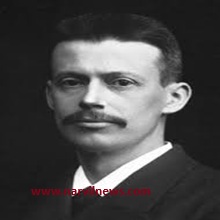
Ronald Ross (1902)
Nobel Prize in Physiology or Medicine 1902.
Born: 13 May 1857, Almora, India.
Died: 16 September 1932, Putney Heath, United Kingdom.
Sir Ronald Ross was born in India on May 13, 1857, to a Scottish Army Officer and his spouse . When he was eight years old, he was relocated to reside on the Isle of Wight in England. Ross went to elementary schools in the Ryde and, in 1869, he was enrolled in a boarding school at Springhill, close to Southampton, for high school education. Since the early years of his life, he harbored a love for poetry, songs, literature, and mathematics. When he was 14 years old, Ross received an award for his mathematics skills. At age 16, in 1873, he achieved the top position in a local examination of drawing at Oxford and Cambridge. Following his studies in England, he matriculated at St. Bartholomew’s Hospital Medical College in 1874 . After a few years, Ross joined the Liverpool School of Tropical Medicine and ultimately became a professor of Tropical Medicine at the University of Liverpool. In 1912, Ross was appointed physician for tropical illnesses at the King’s College and Hospital in London, and later Director of the Ross Institute for Tropical Diseases, which was named in his honor . Ross survived his wife’s death in 1931 and died a year later on September 16, 1932, at the Ross Institute in London, following a long illness. Ross also developed mathematical models for the transmission of malaria.
Ronald Ross did not conform to conventional standards or typical normative ideas within academic naturalism. He developed a fresh concept for parasitology and endorsed a theory centered around the principle that every illness must be linked to a specific biological agent (pathogen). Ross’s interest in malaria began in the early 1890s when he was stationed in India. At that time, malaria was a major health issue, but its transmission mechanism was not understood. Influenced by the work of Sir Patrick Manson, who hypothesized that mosquitos contributed to the transmission of malaria, Ross embarked on research that would eventually validate this theory. On August 16, 1897, Ross allowed 10 Anopheles mosquitoes to feed on a malaria patient who had volunteered, named Abdul Kadir. Since Ross was not an entomologist, the only entomology book he owned was intended for anglers. He classified the mosquitoes he was researching as grey or barred-back (A), brindled (B), and dappled-winged (C). Over the following days, he dissected the mosquitoes but found no malarial parasites until August 20, when he examined the stomach tissue of one and found cells with clusters of black granules resembling Laveran’s parasites. The next day, he found even larger parasites in another mosquito’s gut, confirming the link between mosquitoes and malaria. Ross named August 20 “Mosquito Day.” Although his transfer prevented further work with humans, he demonstrated the transmission of avian malaria via mosquitoes. In 1898, Giovanni Grassi confirmed the same process with Anopheles mosquitoes and humans Ross became constantly incensed by the government’s lack of support, which he referred to as
“administrative barbarism” for scientists working on medical research. Not every step of his journey was easy sailing. At times, he suspected that some of the responsibilities assigned to him were just to show him his place. He was once assigned to work for the Rajputana Medical Service in a little town called Kherwara. In another event, Ross asked permission from the Surgeon General to continue work on malaria but was denied due to a lack of approval from higher authorities. Because of this and considering that he had invested a significant amount of money into his research, he decided to step down from the Indian Medical Services. On 22 February 1899, Ronald Ross eventually departed from India. From Sir Ronald Ross’s diary entry describing the moment he discovered the malaria vector.
After completing his early education in two small schools at Ryde, he was sent to a boarding school at Springhill, near Southampton in 1869. When he was 14 years old, he won a prize for mathematics. The prize was a book titled Orbs of Heaven. It was later that this book inspired Ronald to study mathematics in depth. At the age of 16, Ronald was bracketed first in England in the Oxford and Cambridge local examination in drawing. He had made a pencil copy of Raphael’s painting titled Torchbearer, and that too in just a few minutes! At age 17, Ross declared his ambition to become a writer. But his father would have none of it. He was told in no uncertain terms what career to pursue. In Ross’s own words later: “I wished to be an artist, but my father was opposed to this. I wished also to enter the Army or Navy; but my father had set his heart upon my joining the medical profession and, finally, the Indian Medical Service, which was then well paid and possessed many good appointments; and, as I was a dreamy boy not too well inclined towards uninteresting mental exertion, I resigned myself to this scheme….” Forced by his father, he joined the St. Bartholomew’s Hospital in London in 1875. Most of his time in medical school was spent composing music or writing poems and plays. During the course of his medical school, Ross came across a woman from the Essex marshes who was complaining of headaches, pains in her muscles and feeling very hot and then very cold. Essex marshes who was complaining of headaches, pains in her muscles and feeling very hot and then very cold. Ross questioned her exhaustively and diagnosed her as suffering from malaria, which was unusual, as it was only found in hot tropical countries such as South America and India. His detailed diagnosis however, frightened the woman away and she never returned, so Ross was unable to prove his diagnosis. Not surprisingly, he completed his medical studies “without distinction” and flunked the qualifying examinations for the Indian Medical Service. When his father threatened to cancel his allowance, he took a job as ship’s surgeon on a vessel sailing between London and New York. In 1881 he repeated the qualifying examinations and this time ranked seventeenth of twenty-two successful candidates. After four months’ indoctrination at the Army Medical School, Ronald Ross finally fulfilled his father’s wish by entering the Indian Medical Service in 1881.
With his not-so-impressive result, Ross was commissioned for the Madras service, the least prestigious of the three Indian Presidencies (Bengal and Bombay were the more desirable appointments) and worked in many places like Mysore and Madras and also served in the Burma War and in the Andaman Islands. While in Madras, a large part of his work was treating soldiers ill with malaria. The treatment with quinine was successful, but many died because they failed to get treatment. He also studied mathematics which he applied to the study of malaria later. From the early days of his work in India, mosquitoes engaged Ross one way or the other. In 1883, Ross obtained the post of Acting Garrison Surgeon at Bangalore. Although Ross found the bungalow that was provided for his accommodation pleasant to live in, he was irritated by the large number of mosquitoes which constantly buzzed around the rooms. He also noticed that there seemed to be more mosquitoes in his bungalow than in others and that there was a particularly large swarm around a barrel with water that was kept outside the window. When Ross looked in to the barrel he saw lots of “wriggling” grubs breeding in the water, which he identified as mosquito larvae. Ross tipped the barrel to empty the water and found that the number of mosquitoes reduced. This started him thinking that if the places where mosquito bred were removed it might be possible to eliminate them completely. But everyone did not approve of this solution. “When I told the adjutant of this miracle,” Ross wrote, “and pointed out that the mess house could be rid of mosquitoes in the same way (they were breeding in the garden tubs, in the tins under the dining table and even in the flower vases) much to my surprise he was very scornful and refused to allow men to deal with them, for he said it would be upsetting to the order of nature, and as mosquitoes were created for some purpose it was our duty to bear with them! I argued in vain that the same thesis would apply to bugs and fleas, and that according to him it was our duty to go about in a verminous condition.” Ross held these views on mosquito control till the very end and found the same apathy from governments!
But even with all this, he was not at all enthused. He spent his free time concocting equations he hoped would revolutionize mathematics and writing poetry, music, plays, and bad novels that he published at his own expense. However, he did develop some interest in tropical diseases, like all his peers would have during the period when these were rampant in most parts of India, particularly malaria that killed more than a million in India each year. His experience with malaria as a student also probably stirred Ross’s interest in malaria. True to his style, Ross composed this verse about his first impressions of malaria that killed millions:
After working for 7 years in India from 1881, he got bored and returned to England on a furlough in 1888. But he was aware that his literary career was not promising, being unable to establish a readership beyond his family and friends. So he took a course of Diploma in public health in London and acquainted himself with microscopic skills and laboratory techniques. In between he found time to write another bad novel, invented a new shorthand system, devised a phonetic spelling for the writing of verse, and was elected secretary of a local golf club. During the same period, he courted and married Rosa Bessie Bloxam in April 1889 and returned to India with her. Their first daughter was born in 1891 and the second one in 1903.
Awards and recognition came behind Ross. In 1901 Ross was elected a Fellow of the Royal College of Surgeons of England and also a Fellow of the Royal Society, of which he became Vice-President from 1911 to 1913. In 1902 he was appointed a Companion of the Most Honourable Order of Bath by His Majesty the King of Great Britain.
In 1902 he was awarded the Nobel Prize for Medicine “for his work on malaria, by which he has shown how it enters the organism and thereby has laid the foundation for successful research on this disease and methods of combating it”. (Nobel Prize in physiology and medicine has never been awarded for work in biostatistics or epidemiology. The “exception who proves the rule” is Ronald Ross, who won the second medical Nobel; but Ross himself considered the mathematics of epidemic theory as his most important scientific contribution).
That Sir Patrick Manson missed the Nobel Prize also did not go down well with those who knew of his contribution to Ross’s work. The 100 or so letters that they wrote to each other in the two decades afterward poignantly document the gradual cooling of a creative friendship and the difficulty of a teacher-pupil relationship evolving naturally into one of equals.
On the 15th August, 1897, one of his assistants brought a bottle of larvae, many of which hatched out next day and among them he found several “dappled-winged mosquitoes”. Delighted with this capture, on August 16th, he fed them on his malaria patient, Husein Khan,with crescents in his blood. (Husein Khan was paid 1 anna per mosquito he was bitten by; he came away with 10 annas.) That evening he wrote to his wife: “I have found another kind of mosquito with which I am now experimenting, and hope for more satisfactory results with it.” On the 17th he dissected two of these mosquitoes but found nothing unusual. On the 19th he killed another and found “some peculiar vacuolated cells in the stomach about 10 microns in diameter.” On August 20th, a dull, hot day, Ross went to the hospital at 7 a.m., examined his patients, dealt with his correspondence and had a hurried breakfast in the mess. One of his mosquitoes had died and this he dissected without noting anything significant. He had two mosquitoes left of the batch fed on Husein Khan on the 16th and at about 1 p.m. he began to sacrifice one. Dissecting it he scrutinized the tissues micron by micron, when suddenly, in the stomach wall he “saw a clear and almost perfectly circular outline.. of about 12 microns in diameter. The outline was much too sharp, the cell too small to be an ordinary stomach-cell of a mosquito..” On looking a little further, there “was another and another exactly similar cell “. He changed the focus of his microscope and there within each of these new cells was a cluster of black pigment. He made rough drawings in his notebook, sealed his specimen, went home to tea and slept for an hour. Died 16 September 1932.