 Narvilnews Whole world at one eyesight

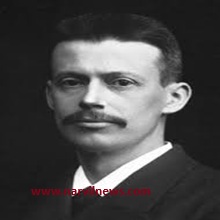
Alfred Werner 1913 (75)-Nobel Prize in Chemistry 1913
Born: 12 December 1866, Mulhouse, France.
Died: 15 November 1919, Zurich, Switzerland.
Alfred Werner was born on December 12, 1866, in Mulhouse in Alsace, France. His father, Jean-Adam Werner, was a factory foreman, while his mother, Jeanne Tesche, was from a low-income family background. Werner was the youngest in the family of four children in a family that was very poor but encouraged the children to be intellectual. His school-based experiments in his early years led to his initial fascination with chemistry. Already at 18, Werner was engaged in chemical research on his own, which was a reasonable basis for his future academic career.
Werner’s primary education was in Alsace, and for his further studies, he went to the Federal Technical High School in Zurich, Switzerland. He performed well in chemistry there, especially under the tutelage of professors such as Arthur Hantzsch. His aptitude for understanding chemical ideas advanced rapidly, and in 1889, he passed the diploma in Technical Chemistry. Werner went to the University of Zurich to complete his doctorate, which he did in 1890. His thesis was on the spatial organization of atoms in nitrogen compounds, which is the work that formed the basis of his future research in coordination chemistry.
Werner was interested in breaking limitations in his early years of education. In 1891, he went to Paris to work under the famous chemist Marcellin Berthelot at the Collège de France to develop himself more. During these formative years, Werner had already developed an interest in the geometrical arrangement of molecules to transform the study of inorganic chemistry.
Alfred Werner’s contribution to chemistry can be summed up as the shift of focus to coordination theory. This described how metal atoms formed bonds with ligands, altering the way chemists viewed chemical compounds and introducing new concepts into chemistry.
Before Werner’s work, the bonding of transition metals needed to be better explained, and there was no way to describe the behavior of the metals in compounds. Werner’s contribution that the metal atom is at the center of the ligands, and the ligands are arranged geometrically around the metal atom, introduced order into a somewhat disorganized study area.
Werner’s theory of coordination, which he put forward in 1893, described how metal atoms could coordinate with other molecules to form stable complexes. His finding of the coordination numbers, including the number six as a typical number for the transition metals, paved the way for determining the geometric arrangements of these compounds. This was a significant leap in inorganic chemistry and paved the way for synthesizing and analyzing synthetic and natural products.
Werner did not limit himself to theoretical work; he synthesized many compounds he investigated, thereby supporting his theories with practice. His research included the discovery of optically active coordination compounds. He demonstrated that even metal complexes could exhibit properties previously believed to be characteristic of organic compounds only, such as chirality. This breakthrough was significant in fields such as pharmacology and material science.
Werner’s influence did not end with his death. His coordination theory became a significant part of chemistry education in modern schools. The ideas he introduced have been developed further in fields such as bioinorganic chemistry. Other areas of Werner’s accomplishments include several awards, such as the Nobel Prize in Chemistry in 1913. Today, his name is associated with coordination chemistry, and his work remains a source of knowledge in modern chemistry regarding molecular structures.
Alfred Werner was a chemist from Switzerland who contributed to the field of coordination chemistry and revolutionized the way chemists think about molecules. Werner was born in Mulhouse, Alsace, and grew up in a family of four children as the last born. Ever since he was young, he had a passion for chemistry, and when he was 18, he conducted his first independent project.
He later went to the Federal Technical High School in Zurich to further his education and graduated with a diploma in Technical Chemistry in 1889. Some of his early academic heroes were chemists, including Professor Arthur Hantzsch. In 1890, he received his Ph.D. at the University of Zurich, where he published original work on the geometry of nitrogen-containing molecules.
Werner’s most significant contribution was made in 1893 when he developed the coordination compounds theory. He stated a theory on how some metal atoms interact with other ions or molecules, which went against the established chemical theories. He gave an idea of ‘coordination number,’ the number of ligands bonded to the central metal atom, and provided better insight into molecular shape. This theory provided the basis for the development of modern inorganic chemistry. In 1893, Werner was the first to propose correct structures for coordination compounds containing complex ions, in which a central transition metal atom is surrounded by neutral or anionic ligands.
For example, it was known that cobalt forms a “complex” hexamine cobalt (III) chloride, with formula CoCl3•6NH3, but the nature of the association indicated by the dot was mysterious. Werner proposed the structure [Co(NH3)6]Cl3, with the Co3+ ion surrounded by six NH3 at the vertices of an octahedron. The three Cl− are dissociated as free ions, which Werner confirmed by measuring the conductivity of the compound in an aqueous solution, and also by chloride anion analysis using precipitation with silver nitrate. Later, magnetic susceptibility analysis was also used to confirm Werner’s proposal for the chemical nature of CoCl3•6NH3.
He introduced the more fully-realized Coordination theory of chemistry in 1901, and published an influential book on the subject in 1904. Though widely rejected by scientists for several years, his theory led to better explanations of the properties of observed compounds, and it gained acceptance as Warner and his students were able to identify dozens of previously unknown compounds and synthesize dozens more. In 1905 he offered a reorganization of the periodic table, moving the lanthanide elements (“rare earths” with atomic numbers 58-71) to a separate place in the table, where they remain today.
Werner’s work was instrumental in changing the chemist’s perception of bonding in transition metals. His ideas were rewarded with the 1913 Nobel Prize in Chemistry, and he became the first inorganic chemist to do so.
While Werner succeeded in the scientific field, he had problems in his personal life, especially with his health. By 1915, arteriosclerosis was already interfering with his capacity to lecture and research. He worsened, and in 1919, he was compelled to give up his professorship at the University of Zurich. Werner died later that year at the age of 52. His work lives on in chemistry, especially in ions and the coordination of transition metals.