 Narvilnews Whole world at one eyesight

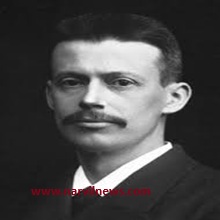
Allvar Gullstrand 1911 (65)
(5 June 1862 – 28 July 1930)
He was born on 5 June 1862, in Landskrona, Sweden. He received his early education in Lund and Uppsala, where he developed a keen interest in the sciences. After completing his medical degree at Uppsala University in 1888, Gullstrand focused his research on ophthalmology. He continued his studies in Vienna and Berlin, where he worked with prominent scientists and further honed his expertise in the field.
work primarily focused on the field of ophthalmology, specifically in the areas of optics and eye physiology. He conducted extensive research to understand the mechanisms of vision and made significant contributions to the understanding of how light is refracted and focused by the eye.
One of Gullstrand’s most notable works was the development of the Gullstrand slit lamp biomicroscope. This device allowed for precise measurement of the curvature of the cornea and the observation of the eye’s anterior segment. The slit-lamp biomicroscope revolutionized the field of ophthalmology by providing ophthalmologists with a powerful tool for diagnosing various eye conditions and evaluating the eye’s refractive properties.
Between 1885 and 1888, Allvar Gullstrand studied medicine, following the career of his father and it seemed appropriate to select the speciality of ophthalmology since this could utilise specifics of mathematics that he had previously acquired.
After qualifying, he took up a post in the Seraphim Hospital in Stockholm. Being ambitious within the sphere of academic achievement his doctorate thesis, entitled Contribution to the theory of astigmatism, re-examined the prevailing models of astigmatism and was well received when published in 1890.
His appointment in 1891 as a lecturer at the Karolinska Institute would largely be due to his postgraduate studies. The subsequent award in 1895 of a specially created Chair of Professor of Ophthalmology at Uppsala University eventually allowed more time for researches into the structure of the eye where the publication in 1900 (in German), entitled General Theory of Monochromatic Aberrations and Its Implications for Ophthalmology, introduced him to the wider community of the science of optics.
The style of presentation used by Gullstrand in his mathematical models of visual functions is difficult to follow. In a specific work,1 for example, a chapter of 28 pages has over 150 equations all of which are unnumbered and without any diagrams.
This, however, appears to have been the conventional style for presentation of work of this kind. In addition, the bulk of his subsequent publications are in either German or Swedish, with only one major work available as an English translation.
Gullstrand’s research also focused on the dioptric system of the eye, which involves the study of the eye’s refractive elements, including the cornea, lens, and other structures. He made significant advancements in understanding how these elements contribute to the formation of images on the retina and how the eye adapts to different distances, a process known as accommodation. He died on 28 July 1930, in Stockholm, Sweden.
Allvar Gullstrand (1862–1930) was a Swedish ophthalmologist whose study of the physiological and geometric optics of the eye challenged existing theories by discovering new ways of examining the structures of the eye. His key invention was the slit lamp but he is also known for the development of the reflex-free ophthalmoscope and the schematic eye. He was awarded the Nobel Prize for medicine or physiology in 1911.
Though he had no formal training in physics, Gullstrand was appointed to the Nobel Committee for Physics, where he maneuvered behind the scenes to ensure that Albert Einstein never received a Nobel Prize for his theory of relativity. Gullstrand seemed to have not quite understood Einstein’s theory, doubted its accuracy, and described it as being “of little significance”. Einstein was honored with a Nobel Prize in 1921, but it was for his study of photoelectric effects.
While Gullstrand is sometimes credited with the first use of the ‘photo-keratotomer’ for determining the corneal profile, there is in fact an earlier trail of investigation and discovery, which Levene3 describes in some detail. A device for detection of abnormalities of the corneal topography had been developed by Henry Goode, a Cambridge physician in 1847, where the reflection of a square object from the cornea provided an indication of the corneal profile.
A more convenient device was developed by Antonio Plácido in 1880, where the reflection of a disk with concentric black and white rings could be viewed through a central aperture. The rings were typically illuminated by means of light situated behind and adjacent to the patient’s head.
Such devices are still available for screening applications. It is an observation that many of the early researchers into details of the corneal profile suffered from astigmatism. While this technique could confirm the presence of degrees of astigmatism and other corneal issues visual inspection alone could not provide confirmation of precise values of corneal topography or accurately record changes over time. Levene also indicates that Plácido went on to develop the ‘photo-keratoscope’ in 1880 as a technique for recording the pattern of observed rings on the cornea and was a method independently developed by Emil Javal in France.
Later Gullstrand, in 1896, would use the technique to derive accurate measurements of the optical power of the anterior eye surface. Such measurements would identify key elements of his standard eye model.
Gullstrand took considerable care to make his measurements of the reflected Plácido ring profile – coating the photographic plate with a layer with the exact same refractive index as the glass plate to avoid double images. The measurement accuracy he achieved for measuring the location of points on the captured corneal image plate was of the order of 2.5 microns. The high levels of illumination required was provided by a pair of 25 amp Siemens arc lamps. This level of direct exact observation explained many of the aspects of astigmatism related to aspects of the corneal profile.
Gullstrand endeavoured to simplify such observations for everyday practical use, but little notice of his efforts was taken in the wider world of ophthalmology. While the ophthalmoscope developed by Hemholtz was in itself a significant advancement for routine examination of the retina, a major drawback to image quality was the reflection of illumination light from the corneal and lens surfaces. This led Gullstrand to develop various versions11, 12 of ‘reflex free’ ophthalmoscopes – one handheld and another stationary. The first versions of these were developed by him in Sweden and were well received at the spring meeting in 1911 of the Swedish Ophthalmological Society. In one version developed subsequently by Carl Zeiss (Jena), the ‘large Gullstrand’ ophthalmoscope, with binocular option was identified as allowing observation of surface topography of the retina. A more ‘basic’ model was also available as the ‘large simplified Gullstrand Ophthalmoscope’ in which there remained slight element of reflection from the optical lens elements. In a Bausch + Lomb version of the large Gullstrand Ophthalmoscope there is described a ‘drawing apparatus in position’ to allow the observer to sketch the observed retinal profile. Gullstrand passed away in July 1930 in Stockholm, Sweden, from a cerebral hemorrhage.