 Narvilnews Whole world at one eyesight

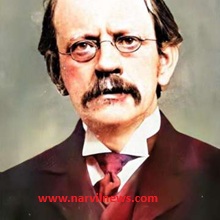
Henry Dunant
_born May 8, 1828, Geneva, Switzerland
—died October 30, 1910, Heiden
Henry Dunant was born on 8 May 1828 in Geneva. From his native town and his solid middle-class family background he acquired breeding, polish, a wide knowledge of the world and a strict Protestant education. His mother, a sister of the celebrated physicist Daniel Colladon, exerted a great influence over him, as he himself acknowledged in his Memoirs.
His father, Jean-Jacques Dunant, was a merchant who was also a magistrate in the Geneva Court of Wards, and from whom he learnt at an early age to do good. On leaving school, Dunant spent some time in a bank, learning the business. Already in 1849, under the influence of a movement known as the “A wakening ” and moved by an ardent personal faith, he joined a group of young people of the Free Church and exchanged letters with similar groups in England, France, Germany, Holland and the United States. He at once perceived the possibility of an international and ecumenical movement, and in 1855, with friends who had come to Paris for the Universal Exhibition, founded the World Alliance of Young Men’s Christian Associations, better known as the YMCA.
As soon as he found a suitable opportunity, he left Geneva to seek his fortune in Algeria, conquered twenty years earlier by Louis-Philippe’s armies. He immediately fell under the fascination of that land, opened up to the spirit of enterprise, and crossed it in all directions observing everything with a singularly discerning eye. Going as far as Tunisia, he wrote about that country in a book to which he modestly gave the title ” Notice sur la Regence de Tunis ”, and in which the vivacity of his style is already apparent. He devoted much diligence to the study of Islam and, unlike most Christians of his time, approached that religion, considered by some to be a heathen cult, with the utmost respect, not hiding the admiration which he felt for it in many regards. He went so far as to take lessons in Arabic and practised the difficult art of Arabic calligraphy. What is more, he developed a great affection for the people of North Africa, and when he undertook to set up in Algeria, not far from Mons-Djemila, a large agricultural estate, he vowed to himself that, on his property at least, he would see that Algerian workers were happy and well paid.
But Dunant had not taken into account the antagonism of the authorities. The company which he founded in 1858 under the name of Societe Anonyme des Moulins de Mons-Djemila certainly possessed all that was needed to make it a success: the location was judiciously chosen, capital was adequate, and the mill itself was fitted with the most modern equipment. All that remained to be done was to obtain the land on which the wheat was to be grown. But now, to Dunant’s dismay, the authorities turned a deaf ear. In vain he harried them, went from one department to another; everywhere he ran up against blunt opposition. In desperation, with the intention of approaching higher-placed officials, he went to Paris, spending all his time outside the offices of various ministers, but there, too, he was put off with vague answers.
Still higher up, there was only the Emperor himself to turn to. But Napoleon ill was already far from Paris. Taking up the cause of Italian independence, at the head of his French army, he was already fighting the Austrian forces under the command of their youthful Emperor Franz-Josef. Dunant decided that he too would go to Lombardy. When he arrived there, the region was devastated by war; several battles had taken place, at Montebello, Palestro, Magenta, but everyone felt that the clash that was to settle the war was imminent. This decisive battle, the bloodiest carnage in Europe since Waterloo, broke out on 24 June 1859, not far from Solferino. Dunant was not far away and, drawn in his carriage at a fast trot, could distinctly hear the gunfire. A few minutes later, he was to receive the greatest shock of his life. As night fell, he entered Castiglione. The village was jammed, in great confusion, with a large number of the wounded from the neighbouring battlefield. Nine thousand were crowded in the streets, squares and churches. For Dunant, without any warning, it was the first, brutal encounter with the horrors of war.
Overwhelmed by the sight, Dunant alighted from the carriage, went through the town and climbed the road leading to the main church, the Chiesa Maggiore. All down the slope, in a channel dug to collect rainwater, blood flowed without stopping, for days and days.
Dunant entered the church. It was filled with wounded troops, some lying inert, some moaning, others screaming with pain. The nave was alive with clouds of flies and reeked of a nauseous smell compounded of excretion and gangrene. Although lacking any medical knowledge, Dunant all the same attempted to clean the wounds, to make up dressings and fix up some sort of couch for those wounded who had been flung down unceremoniously on the stony floor. They were all tortured by thirst. He got them some water to drink from the fountain. He listened to the last wishes of the dying, put his arm under their head and spoke a few words of comfort. He managed to persuade a number of the local women to help. They hesitated at first, reluctant to care for French soldiers, for they feared the Austrians would return in force and punish them for having assisted enemy troops. But Dunant persuaded them that suffering was the same for all people, that this was the only thing which mattered. Soon, the women, too, were repeating his words: Tutti fratelli.
In addition to compassion, Dunant felt growing in him another feeling: indignation. For he heard the same phrase crossing the lips of all those wounded men, whom he tended night and day: Ah! Sir, we fought well, and now we have been left to die. Dunant was shocked at the very idea of those men being deserted, forsaken. Only very occasionally would some mules be sent to fetch the wounded, a few at a time, from the battlefield. Those abandoned there were at the mercy of looters who, when darkness fell, would even strip them of their clothing, leaving them to die from exhaustion and thirst. Even the wounded lucky enough to be helped along by a compassionate comrade or those who were able to drag themselves to a spot where they hoped to find someone to care for them were not much better off. Dunant was in a good position to judge the situation. He found that there were only six French army doctors available for the nine thousand wounded in Castiglione, and to his horror he realized that this was no mere stroke of illfortune, but that it had always been so, that this monstruous disproportion between the number of troops and the medical services was due to the fact that the latter were so small and under-staffed that they were practically non-existent. A soldier who was not in a fit state to fight was not worth anything to anyone.
Henry Dunant’s business trip was a failure, for the meeting with Napoleon III he had hoped to arrange did not take place. Back in Paris, he resumed his struggle against the inertia he met with everywhere in government offices. Two years went by in this way, from one antechamber to another. Would the memory of Castiglione recede in the mists of time? Surely not, for he was haunted by the horror he had witnessed; it pursued him with a vague compulsion, as if he felt deep within himself that there was still something he had to do.
Dunant must have felt this loathing of war more than anyone else, and no one can read his book without sharing his feeling. But that was not the purpose he had in mind. His object was to stress all that which was odious in war: mobilizing soldiers, exposing them to countless hardships and dangers, and then leaving them to die like cattle when enemy fire had rendered them helpless and unable to fight.
The recognized process towards the conclusion of a treaty is a diplomatic conference, and arranging for one to be held is not within the competence of ordinary citizens. It is necessary that the convocations be sent out by a government, and in this case it was the Swiss Government which declared itself willing to convene the conference, and not at Berne, Switzerland’s capital, but at Geneva, where the Red Cross was born. There still remained the business of creating a suitable atmosphere, stimulating the interest of government circles and persuading them to send to Geneva plenipotentiaries qualified to sign this new diplomatic instrument. This Dunant set out to do: the Germans were to a large extent already won over to his views, so it- was to France that he turned his attention. He was so eloquent for the cause that he was able to gain the support of the French Minister for Foreign Affairs, Drouyn de Lhuys. Instructions were sent to the French ambassadors to make known to the governments of the countries to which they were accredited that Napoleon III took a personal interest in the question of the neutrality of the Medical Services. It was sufficient to decide other countries in Europe.
Although Dunant did not take part officially in the international conferences which followed-except for the 1867 Paris Conference where he was rapporteur on the question of prisoners of warhe fought singly, against all obstacles, for the propagation of his ideas and for the protection, by diplomatic conventions or international agreements, of prisoners of war, of wounded and shipwrecked members of armed forces at sea and of certain categories of civilians. Many years were to go by before, without Dunant, all such objectives were achieved.
Dunant exerted so much activity and zeal that the French Government, which appeared at one time to have completely forgotten about the Geneva Convention, decided to publish its text. In particular, he multiplied his efforts to bring relief to the wounded. He actively took part in the despatch of ambulances by the French Society for the Relief of the Wounded towards the battlefields. As at Castiglione a dozen years before, he visited and brought comfort to the wounded transported back to Paris. He introduced the system of identification discs so that the dead might be identified, and busied himself with the question of granting belligerent status to irregular forces and mobile armed volunteers, who, he said, “wore tunics but no uniform, in order that they should not be shot as lawless armed peasants “. He was already seeking the acceptance of the protection of guerrilla troops.
During the Commune, Dunant displayed not only compassion, but also great bravery. With extraordinary courage, he rescued many victims from the claws of the Paris Federes, and risked his life crossing the lines to intercede with Monsieur Thiers, in order to prevent excesses which he feared the Versaillais would commit. Nevertheless, Dunant was the object of suspicion: who was this man? Was he a spy working for Germany, or was he a member of the” International “, one of those men whom all European Governments were seeking to arrest, imprison and execute? There was some confusion between the” International Working Men’s Associations ” and the word .. International ” qualifying the work of the Red Cross organization. The police could hardly be expected to make such subtle distinctions!
Dunant’s intuition was so perfect that he never went wrong. Yes, indeed, a court of arbitration shall be set up; a convention for prisoners of war shall be signed; the Jews shall go back to Palestine; the immortal works of world literature shall be translated into all languages-but what an exhausting struggle has first to be fought!
Henry Dunant, the founder of the Red Cross, born in Geneva on 8 May 1828, was the first child of a wealthy, religious, humanitarian and privileged household. (Note that although he was baptised Jean-Henri, the most common way that he wrote his name was « Henry ».) He seemed destined to become a priest, but he was so hopeless at French, mathematics and particularly Latin that this idea had to be abandoned.
As a young man, around 1848, Dunant took part in charitable work visiting the poor, the sick and prisoners in Geneva. To have more impact, the group of religiously committed young men formed themselves into the Union of Geneva. Similar groups were formed in France, Belgium and the United States. Dunant became the dynamic international secretary of this global movement. It was he who wrote the charter of what became, in 1855, the Young Men’s Christian Association, whose headquarters is still located in Geneva today. He caught up with the Emperor in northern Italy on Friday, 24 June 1859- – the day of the Battle of Solferino. On the battlefield the Italo-French army faced the Austrians. The carnage was frightful : it is estimated that there were some 40,000 casualties. Many were left to die of wounds, thirst and neglect in the following days.
It will take some considerable time before the studies currently being made will throw an accurate light on Dunant’s intellectual activity during this period of his life. We shall restrict ourselves, for the moment, to considering the fruits of that activity at Heiden, at the end of his span of life, in the radiance of a capacity of thought brought to full maturity, the thought of a genius transcending the struggles, hopes and vicissitudes of his time, in order to propose to the world the only possible solutions that could ensure its survival when, out of the titanic confrontations of the twentieth century, mankind awakens to the unity and solidarity of human beings and gives birth at last to Peace.
What an extraordinary existence was Dunant’s! First, thirty four years of a life of inner preparation, of study, of meditation, of activities quietly carried out without any external show, followed by five years, from the publication of Un Souvenir de Solferino to the bankruptcy of the Credit Genevois, of celebrity and success; and then twenty-eight years of poverty, wandering and seclusion, ending with fifteen years of renown, during which he never quitted his room in Heiden’s hospital. In 1901 he was awarded the first Nobel Prize for Peace and his work was thus acknowledged for all time. He died at Heiden on 30 October 1910. It would not be correct to speak of his death as an ending. It would seem rather that his spirit has been released to act still more, throughout the whole world. He continues to arouse in men a vocation, to serve as an example, to rescue the suffering. Dunant’s action is every day repeated, in countless places, where men and women tend human beings in distress, caring not where they are from or under whom they serve, but only for the nature of their suffering.