 Narvilnews Whole world at one eyesight

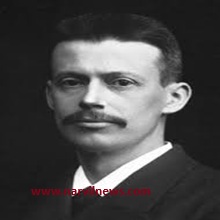
Tobias Asser 1911 (66)
born on April 28, 1838, and died on July 29, 1913,
Tobias Asser, born in Amsterdam on April 28, 1838, is best known for his work in the formation of the Permanent Court of Arbitration during the 1899 Hague peace conference which ultimately earned him, alongside his colleague Albert Fried, a Nobel Prize.
Born into a family with a lineage in law, Tobias Asser began his legal career studying at the Athanaeum in Amsterdam, earning a doctor’s degree in law in 1860 at the age of 22. Asser practiced law for a brief period but found greater focus in academe, scholarship, and politics. In 1862, he accepted a posting at his alma mater to teach private law. He continued as a professor of international and commercial law through Athenaeum’s transition to the University of Amsterdam.
Asser co-founded the Revue de droit intonational et de legislation compare, a major joumal of international law, first published in 1869. Four years later he would be invited to participate in a conference in Ghent the principal result of which was the formation of the Institute of International Law, an organization that Asser would later lead.
Asser dedicated a significant portion of his life to the belief that legal conflicts between nations could be solved through peaceful means; specifically, through conferences by which nations could agree upon and implement mutually beneficial solutions to common problems. This dedication lead to a number of conferences called by the Dutch government at The Hague resulting in numerous treaties between the nations of Europe. Among these was the formation of the Permanent Court of Arbitration through the Hague Peace Conference of 1899. Formed under the auspices of Articles 20 and 29 of The Hague Convention for the Pacific Settlement of International Disputes, the Permanent Court of Arbitration sought to facilitate arbitration and other forms of dispute resolution between states. Asser sat on the Court’s first panel to hear a controversy brought by two states, the Pious Fund of the Californias Case, in 1902. Asser’s work in peaceful dispute settlement, specifically the formation of the Permanent Court of Arbitration, earned him the Nobel Peace Prize in 1911.
The formation of The Hague Academy of International Law can also be traced, in part, to Asser’s dedication to intemational law. He did not, however, live to see its formation, passing on July 29, 1913 in The Hague. Asser’s namesake lives on through the T.M.C. Asser Institute, a research institute in the fields of private and public international law with its offices in The Hague.
Tobias Asser was awarded the Nobel Peace Prize for his role as co-founder of the Institut de Droit International and pioneer in the field of international legal relations. He shared the prize with Alfred Fried. Jurist Tobias Asser helped to found the Institute of International Law in 1873, the first organization to be awarded the Nobel Peace Prize (1904). Asser was an expert on international civil law. In the 1890s he sought consensus for the drawing up of binding international agreements on the resolution of civil disputes, including those related to marriage, separation and divorce. Asser took active part in the Hague Peace Conferences of 1899 and 1907, where he worked to expand and improve the Geneva Convention. But it was his efforts in the area of private law that were emphasized when he was awarded the Nobel Peace Prize. He maintained that knowledge of civil law across borders would promote peace. There was good reason that Tobias Asser was compared to his compatriot Hugo Grotius, founder of the field of modern international law in the 1600s.
For Asser, the role of law was vital to the emancipation of the Jewish minorities in Europe, as was the case for any minority. He worked with an integral view of the Rule of Law, to be strengthened as much in the domestic as in the international society. Asser’s dedication to citizens’ rights and the principle of legal equality is visible, for example, in his advocacy of equal voting rights for women.
T.M.C. Asser’s mission of peace, liberty and justice defined both his academic and diplomatic work. He intended to listen to ‘the voice of the conscience of [his] century’ and tirelessly applied his legal genius to develop public and private international law. After decades of neutrality, he would moreover steer the Netherlands back into the diplomatic arena and towards a more prominent international position.
The institution of this Annual Lecture is inspired by these ‘Men of 1873’ in general and by Asser’s social progressive, ‘principled’ pragmatism, liberalism, and ‘emancipation from legal traditionalism’ in particular. Drawing inspiration from the ‘Men of 1873’ is however not without complications. Part of their project was the ‘civilizing mission’, with all its consequences. On the one hand, in the early decades of the 20th century these scholars may have been hopeful about decolonisation and lifting developing countries out of poverty. Asser’s own involvement in attempts to end a most ‘embarrassing chapter of Western history’, the Opium Wars, may also be mentioned. On the other hand, international law as an instrument of civilisation has surely shown its dark sides. Today, more than ever before, we are aware of how internationalism and the Rule of Law have been the handmaidens of (economic, legal) imperialism.27 Scholars have pointed to the ‘double standards’ as ‘an integral part of the ideology of democracy and the rule of law’ so visible in the application of international law even today.
The rich and somewhat complex heritage of internationalism does not leave room for naïve ideas about international law as an instrument only for the good of liberal-humanitarian reform; if ‘[l]egal internationalism always hovered insecurely between cosmopolitan humanism and imperial apology… [and i]f there is no perspective-independent meaning to public law institutions and norms, what then becomes of international law’s universal, liberating promise?’ While for some this rhetorical question marks the end-point of possible legal endeavours, the Annual T.M.C. Asser Lecture hopes to be a place for reflecting critically on what lies beyond this question. As Koskenniemi points out, ‘[i]n the absence of an overarching standpoint, legal technique will reveal itself as more evidently political than ever before.’ And so, since ‘[i]nternational law’s energy and hope lies in its ability to articulate existing transformative commitment in the language of rights and duties and thereby to give voice to those who are otherwise routinely excluded’, we ask: What does the esprit d’internationalité mean today and what could it mean in and for the future?