 Narvilnews Whole world at one eyesight

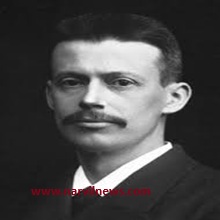
Karl Ferdinand Braun 1909 (56)
Born: 6 June 1850, Fulda, Hesse-Kassel (now Germany).
Died: 20 April 1918, Brooklyn, NY, USA.
Karl Ferdinand Braun was born on June 6, 1850 at Fulda, where he was educated at the local “Gymnasium” (grammar school). Karl Ferdinand Braun was a German inventor, physicist and Nobel laureate in physics. Braun contributed significantly to the development of radio and television technology: he shared the 1909 Nobel Prize in Physics with Guglielmo Marconi “for their contributions to the development of wireless telegraphy”. He also seems to have invented the oscilloscope, an important instrument to this day.
The Nobel Prize-winning electrical engineer and physicist Karl Ferdinand Braun was a leading innovator and industrialist in the early history of wireless telegraphy and the inventor of numerous technologies that are now vital to electronics and television. For example, he invented the point-contact junction, the cathode-ray tube, transmitter circuitry, and the phased array antenna. However, Braun is largely forgotten by the present generation except for articles such as this one. This contribution to the “Historically Speaking” column seeks to tell something of his life, inventions, and his concept of phased arrays for wireless telegraphy.
German physicist Karl Ferdinand Braun, who never used either his first name or first initial, discovered the principle of crystal diode rectification in 1874 as he invented the lead sulfide-based point contact rectifier. Originally envisioned by Braun as a method to establish electrical contact with minerals to further his investigation of electrolysis, his point-contact rectifier effect formed the foundation of modern solid-state electronics, but he did not patent this work until decades later, as the potential of its adaptations became more clear.
Braun next took a lectureship at the St. Thomas Gymnasium in Leipzig, a post he also held for two years. Then, from 1876 to 1880 he was extraordinary professor at the University of Marburg, his alma mater. In 1880 his itinerant career took him outside of Germany, to the University of Strasbourg in France, where he remained for three years engaged in research, leaving in 1883; he returned again in 1895 as professor of physics and director of the physics institute. In the intervening years, however, he worked in Germany. For three years he was professor of physics at the Technical High School in Karlsruhe, and in the year he left (1885), he also married Amelie Bühler; they had two sons and two daughters. This must have domesticated him, for he remained at his next job, in Tübingen, for ten years, helping to found the Physical Institute there.
After 1890 Braun produced much of the work for which he was later to become famous. Here, his skill as an inventor combined with his grasp of theoretical principles to effect two significant technological achievements—the coupled transmitter and coupled receiver for improved wireless performance (1899 patent) and the cathode-ray oscilloscope (1897).
Though Karl Ferdinand Braun shared, with Guglielmo Marconi, the 1909 Nobel Prize in Physics for achievements in wireless telegraphy, he is rarely remembered for that honor. He is better known for building the first cathode ray tube (CRT), or “Braun tube” as it is still known in Germany, in 1897. In 1897 he built the first cathode-ray tube oscilloscope. CRT technology is only now, over a century later, gradually being replaced by flat screen technologies (such as LCD, LED and Plasma) on television sets and computer monitors. The CRT is still called the “Braun tube” (“Braunsche Röhre”) in German-speaking countries (and in Japan: “Buraun-kan”).
He became interested in experimenting with wireless telegraphy at an early age. The distance that could be covered by the wireless technology developed by Marconi was about 15 kilometers only. During the development of radio, he also worked on wireless telegraphy. Around 1898, he invented a crystal diode rectifier or Cat’s whisker diode. Guglielmo Marconi used Braun’s patents (among others).
Braun, who spent his career as a professor of physics at German universities, increased the range of Marconi’s transmitter, invented the crystal rectifier (a device that allows current to flow in only one direction, and improves radio transmission), and later invented the oscilloscope, a cathode-ray-tube laboratory device that was the forerunner of today’s television and radar tubes.
In 1897 he invented the Braun tube, a cathode-ray canister that deflects electron beams by changing the voltage, as part of his cathode-ray oscillograph, which later became a basic component of the television receiver. Beginning in 1898 he worked on wireless telegraphy, trying to improve Guglielmo Marconi’s transmitter for sending Morse code signals through air and water. He patented the crystal rectifier in 1899, which led to J. C. Bose’s work with crystals in radio detection and the advent of “cat’s whisker” crystal radio sets. In 1902 he successfully used closed circuit oscillation to send and receive directionally-targeted wireless telegraphy. For their work in electronics and radio, Braun and Marconi shared the 1909 Nobel Prize for Physics.
Braun also investigated the oscillations of elastic rods and strings, deviations from Ohm’s law, and studied magnetic compounds and the thermodynamic principles governing the pressure and solubility of solids. He spent more than twenty years teaching at the University of Strassburg, where his students included the future physician and humanitarian Albert Schweitzer.
In 1917 Braun came to America to provide testimony in a court case involving radio patents. While he was in New York seven American merchant ships were sunk, US President Woodrow Wilson called for a declaration of war, and on 6 April 1917 Congress complied, putting the United States into the thick of the Great War, now called World War I. Braun was already in his mid-60s and effectively retired, but he was deemed an enemy alien and prohibited from returning to Germany. He lived the last year of his life under house arrest at his son’s Brooklyn apartment, where he died on 20 April 1918.